BurntXOrange: how a UT nursing student launched an AI-powered makeup consultant
In October 2024, BurntXOrange profiled former Glamir team member Florence Fadipe and the team building an inclusive, phone-first makeup guide for beginners and underrepresented communities.

Editorial note (August 2026): Florence Fadipe was featured in this coverage while on the early Glamir team. She is no longer with the company. Glamir is currently led by CEO & Engineer Destiny Olanike.
In October 2024, BurntXOrange—the University of Texas at Austin student news magazine—published a feature on Glamir and early team member Florence Fadipe. The story traced how a nursing student turned a Sephora moment into an AI-powered makeup consultant designed to be more accessible, inclusive, and encouraging than traditional in-store tools.
From an idea at Sephora
According to the BurntXOrange report, Fadipe was inspired after seeing an in-store device that scans your face and recommends products based on complexion. She asked a simple question: why couldn't something like that live on your phone—and serve people who rarely see themselves reflected in beauty retail?
What are the odds that we do that? But it's just an app on your cell phone.
Fadipe built Glamir with a small team that included engineering, marketing, and development talent from the UT ecosystem. The goal was not to replace human creativity, but to give beginners a calm, personalized starting point.
Built for inclusion
The BurntXOrange piece highlighted a mission that still defines Glamir today: beauty guidance should work for people who are often left out of mainstream product marketing—including women of color and LGBTQ+ communities.
- Personalized recommendations based on facial structure and skin tone
- Product suggestions from drugstore to premium brands
- A supportive tone aimed at beginners, especially young people entering college
- Features designed to boost confidence, not shame users
What Glamir offered at launch
The article described three core experiences in the early app: a makeup analysis with personalized feedback and a confidence-building score; occasion-based look recommendations with tutorials and products; and a recreate-a-look tool that matches a reference photo to shades and techniques you can try at home.
Early momentum
BurntXOrange noted that Glamir had recently launched on the App Store after roughly three months of development, and that the team earned early recognition through UT's Launchpad Innovation Grant while continuing to expand product links and platform availability.
Glamir has grown since this story—but the through-line remains the same: make beauty education feel personal, accessible, and a little more fun through the tap of your phone.
References
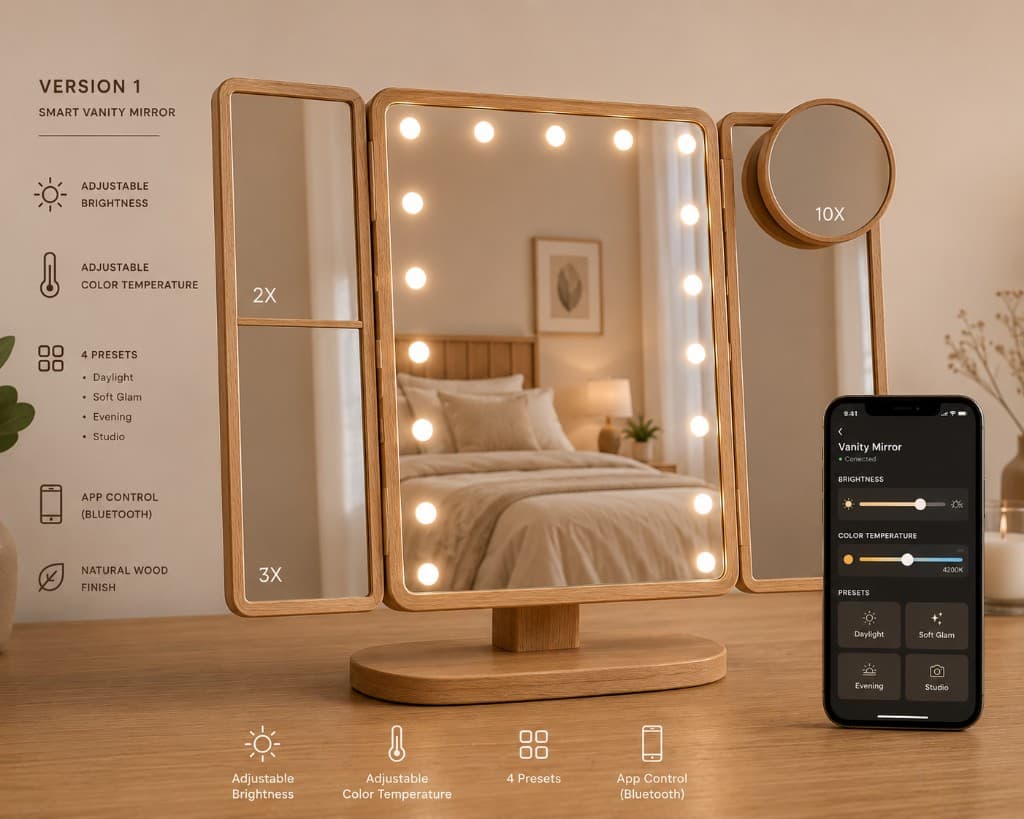
Meet the Glamir Tri-fold
A camera-free smart vanity mirror powered by GlamirOS.
Explore Glamir Tri-fold